

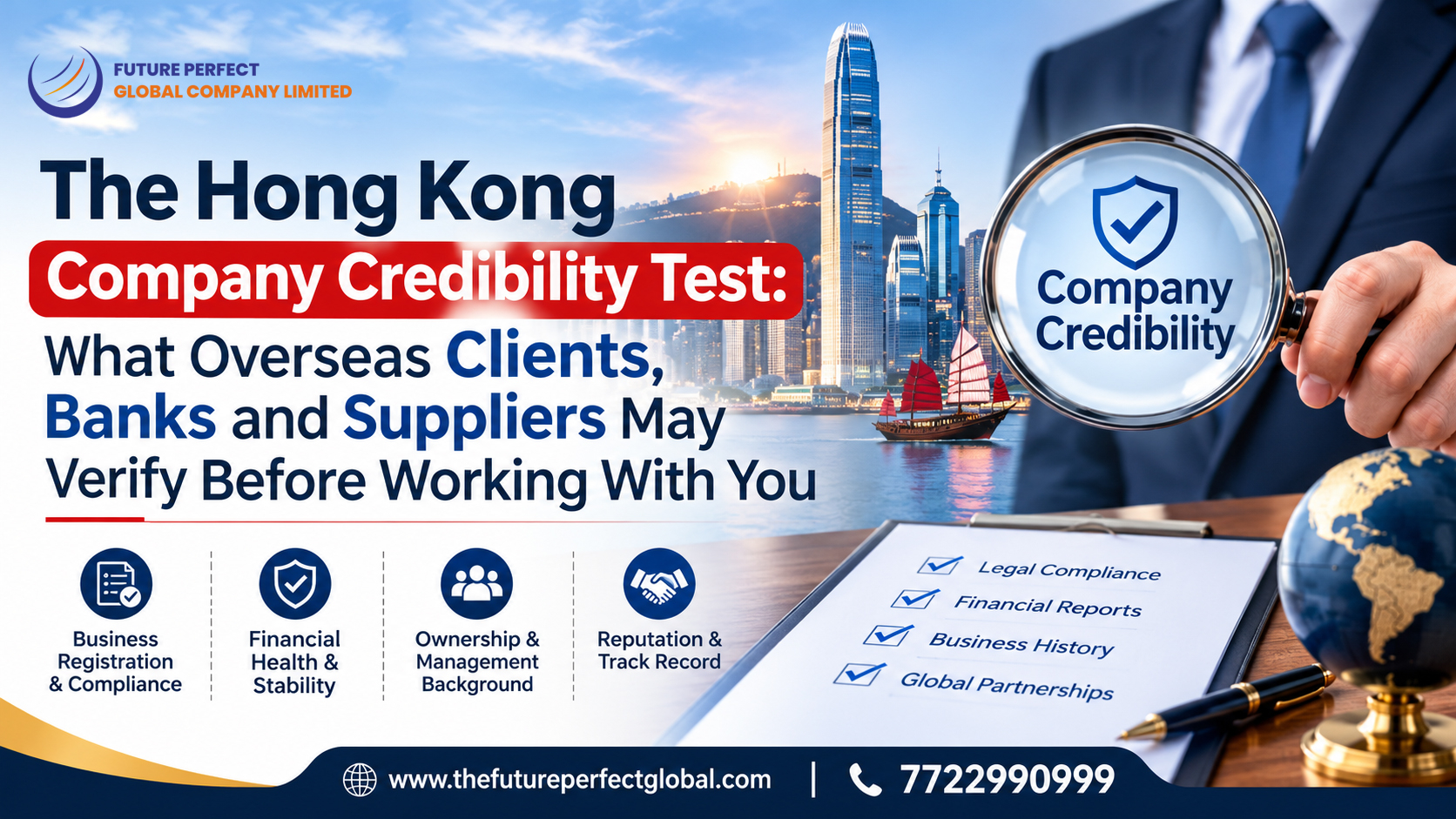
A company registration certificate can establish that a business legally exists. But does it prove that the business is financially reliable, commercially active, properly managed or safe to work with?
Not by itself.
Imagine receiving an attractive proposal from a supplier claiming to operate through a Hong Kong Limited Company. The company shares its registration documents, provides a professional website and offers competitive commercial terms. Everything looks convincing at first glance.
But before signing the agreement or transferring an advance payment, would you know how to verify the company?
This is a question that overseas customers, international suppliers, investors, banks and business partners increasingly need to consider.
Hong Kong is an important international business centre. Entrepreneurs from different countries use Hong Kong Company Incorporation and Hong Kong Company Registration to establish businesses for international trading, consultancy, technology, sourcing and other commercial activities.
However, when companies operate across borders, their business partners may not be able to visit their offices, meet their directors or independently inspect their operations. They therefore rely on corporate records, business documents and due diligence procedures to understand who they are dealing with.
This guide explains the practical checks that may be relevant before working with a Hong Kong business. It also explores how a company can organise its own documents and build confidence with international customers, banks and suppliers.
Whether you are planning to Start Business in Hong Kong, exploring Business Setup Hong Kong options or already operating a Hong Kong company, understanding business verification can help you build more reliable commercial relationships.
Table of Contents
- Why Company Credibility Matters in International Business
- Hong Kong Company Registration: What Does It Actually Prove?
- Check the Official Hong Kong Company Records
- Verify the Company's Core Registration Documents
- Review Directors, Company Secretary and Authorised Representatives
- Understand Shareholding and Beneficial Ownership
- Verify the Registered Office and Business Contact Details
- Check Whether the Business Activity Makes Commercial Sense
- What Banks May Examine Before a Corporate Account Is Opened
- What Overseas Clients and Suppliers Should Verify
- 15 Warning Signs You Should Not Ignore
- How a Hong Kong Company Can Build Its Own Credibility
- The Role of Hong Kong Company Screening and Due Diligence
- The Complete Hong Kong Company Credibility Checklist
- Conclusion
- Frequently Asked Questions
1. Why Company Credibility Matters in International Business
International business relationships are often built on information exchanged digitally. A buyer may be located in Europe, a supplier in Asia and the company coordinating the transaction may be incorporated in Hong Kong.
The parties may never meet physically before agreeing to a transaction.
This creates a practical challenge: how can one business establish confidence in another business that it has never worked with before?
The answer begins with structured verification.
Before entering into a commercial relationship, a business partner may want to understand:
- Does the company legally exist?
- Is its registration status current?
- Are the company name and registration details consistent?
- Who are its current directors?
- Who is authorised to negotiate or sign agreements?
- Does the company's stated business activity make sense?
- Are its corporate documents genuine and current?
- Can its business address and communication channels be verified?
- Are there any unexplained inconsistencies in the information provided?
These questions form the foundation of Hong Kong Company Verification and Hong Kong Company Due Diligence.
Company Existence and Business Credibility Are Two Different Things
A registered company can be legally valid without necessarily having a strong commercial track record.
For example, a newly incorporated company may have a valid Certificate of Incorporation but no completed customer transactions, established supplier relationships or published financial history.
That does not automatically make the company suspicious. It simply means that its credibility should be assessed using information appropriate to its age, activities and business model.
A useful verification process separates three questions:
- Legal identity: Does the company exist, and do its official records match the information provided?
- Commercial capability: Can it realistically deliver the goods or services it is offering?
- Relationship risk: Are there unresolved concerns that should be addressed before money, confidential information or contractual commitments are exchanged?
A company search may help answer the first question. The second and third may require additional documents, commercial references, financial information and independent checks.
2. Hong Kong Company Registration: What Does It Actually Prove?
When a business completes Hong Kong Company Incorporation, it becomes registered under the applicable company law framework.
A typical Hong Kong private company limited by shares receives corporate documents that establish important information about its legal formation.
These may include:
- Certificate of Incorporation.
- Business Registration Certificate.
- Articles of Association.
- Incorporation Form NNC1.
- Company registration particulars.
- Relevant shareholder and director information.
These documents are important for Hong Kong Company Registration, corporate administration and dealings with banks, customers and service providers.
What Does a Certificate of Incorporation Confirm?
The Certificate of Incorporation is evidence that the company has been incorporated under the relevant legal framework.
It is a foundational document for a Hong Kong Limited Company. However, it should not be treated as proof that the company:
- Has a particular amount of available cash.
- Has an active customer base.
- Has completed successful commercial transactions.
- Owns every asset mentioned in a business proposal.
- Has no outstanding debts or disputes.
- Is guaranteed to receive bank account approval.
- Has an established reputation in international markets.
These matters require separate assessment.
Hong Kong Business Registration Is a Separate Requirement
One common source of confusion is the difference between Hong Kong Company Incorporation and Hong Kong Business Registration.
Company incorporation and business registration serve different legal and administrative purposes.
The Certificate of Incorporation is issued through the Companies Registry. The Business Registration Certificate is administered by the Inland Revenue Department under the business registration framework.
Both documents may be relevant when verifying a company's identity and understanding its registration details.
A person planning to Start Business in Hong Kong should understand these separate requirements rather than treating every registration document as interchangeable.
3. Check the Official Hong Kong Company Records
One of the most useful starting points for Hong Kong Company Verification is the official Companies Registry search service.
The Hong Kong Companies Registry provides electronic search facilities through its e-Services Portal. Users can search current company information and access records of documents filed with the Registry.
Official portal: Hong Kong Companies Registry – Electronic Search Services.
What Can You Check Through a Hong Kong Company Search?
Depending on the type of search or report requested, available information may include:
- Company name and previous names.
- Date of incorporation.
- Current company status.
- Registered office address.
- Current director information.
- Company secretary particulars.
- Share capital information.
- Available shareholder particulars.
- Filed documents and their filing dates.
- Other relevant company record information.
The Companies Registry also offers a Company Particulars Report. According to the Registry, this report can provide a summary of important company particulars, including the registered office address, share capital structure, shareholder information where applicable, current directors and company secretary particulars.
Why Current Records Matter More Than Old Documents
A company may have changed its name, director, address or ownership structure after its original incorporation.
An old incorporation document may still be genuine, but it may not show the company's current position.
For example, a supplier might provide a company profile issued several years ago. Since then:
- The original director may have resigned.
- The company may have changed its registered address.
- New shareholders may have been added.
- The company may have changed its name.
- Additional statutory documents may have been filed.
This is why Hong Kong Company Search should be based on current official records and relevant filed documents whenever the transaction requires it.
Do Not Confuse a Company Search With a Complete Background Investigation
Official company search information is valuable, but it has limitations.
A public company record does not independently confirm the financial condition, business reputation, quality of products, honesty of every representative or ability to fulfil a contract.
It should be treated as one part of a wider Hong Kong Company Due Diligence process.
4. Verify the Company's Core Registration Documents
When a company sends its registration documents, do not simply save the attachments and move forward.
Review the details and compare them with the information available from official sources.
A. Certificate of Incorporation
Check:
- Exact registered company name.
- Incorporation details.
- Document consistency with the company's current particulars.
- Any subsequent company name change information.
If the company has changed its name, request the relevant supporting record rather than assuming that two different names represent the same entity.
B. Business Registration Certificate
The Hong Kong Business Registration Certificate should be reviewed for:
- Business name and relevant registration details.
- Business Registration Number (BRN).
- Validity period.
- Business or branch particulars where applicable.
Check the certificate against the relevant business registration information and official records where available.
The Hong Kong Government provides information about business registration services and related searches here: GovHK – Business and Company Registration.
C. Articles of Association
The Articles of Association describe the company's internal governance framework.
Depending on the purpose of the transaction, reviewing the Articles may help clarify:
- Company structure.
- Share-related provisions.
- Director powers.
- Decision-making procedures.
- Rules for meetings and resolutions.
If a proposed transaction involves a major commitment, the relevant authority to approve and execute it should be checked.
D. Incorporation Form NNC1
Form NNC1 is an important incorporation document for a Hong Kong company limited by shares.
It contains information supplied at incorporation, including relevant company, director and shareholder particulars.
Remember that an incorporation form records information at a particular point in time. It should not automatically be treated as a current ownership or management report.
E. Annual Return – Form NAR1
A Hong Kong company generally has an annual return filing obligation under the Companies Ordinance, subject to the applicable rules and company type.
For a local private company, Form NAR1 is an important annual filing.
It contains company particulars that may include:
- Registered office address.
- Company secretary details.
- Director particulars.
- Share capital information.
- Shareholder particulars as required.
A recent annual return can help with a document review, but it should not be treated as a substitute for checking subsequent filings and current company records.
For more information, review the Hong Kong Companies Registry.
5. Review Directors, Company Secretary and Authorised Representatives
A company's legal identity is only one part of the verification process. You should also understand who is responsible for managing it and who has authority to represent it.
Check the Current Directors
The directors are responsible for important aspects of company management and governance.
Before entering into a significant business relationship, consider checking:
- Names of current directors.
- Whether the proposed signatory is a current director.
- Whether the director information matches available corporate records.
- Whether the person communicating with you has appropriate authority.
- Whether recent changes require further documentation.
The Companies Registry provides director-related search services through its electronic search facilities.
Understand the Role of a Hong Kong Company Secretary
A Hong Kong Company Secretary plays an important role in company administration and statutory compliance.
Every Hong Kong company must have a company secretary under the applicable company law requirements.
The company secretary may be an individual ordinarily resident in Hong Kong or a qualifying corporate entity with the required Hong Kong address.
The company secretary's role should not be confused with the role of a director, shareholder, authorised signatory or day-to-day business manager.
A Hong Kong Company Secretary Service can support statutory administration, filing coordination and corporate record management, depending on the agreed scope of service.
Confirm Who Can Sign the Agreement
A common mistake in international business is assuming that the person sending an email or quotation is automatically authorised to bind the company.
Before signing a major contract, consider requesting:
- Confirmation of the signatory's role.
- Relevant board resolution, if required.
- Authorisation or power of attorney, where applicable.
- Confirmation of the company's correct legal name.
- Supporting identification and verification information, where appropriate.
This helps reduce the risk of signing agreements with someone whose authority has not been properly established.
6. Understand Shareholding and Beneficial Ownership
Knowing who owns or controls a company can be important when assessing a potential business partner.
A company may have one shareholder, several individual shareholders or a more complex corporate ownership structure.
Review Shareholder Information
Where available and relevant to the company type, review:
- Shareholder names.
- Number of shares held.
- Shareholding percentages.
- Share capital information.
- Relevant filed allotment or transfer documents.
A Company Particulars Report and relevant filed documents may help establish certain shareholder particulars recorded with the Companies Registry.
However, the information must be interpreted carefully. A historic filing may not reflect a later change that has not yet appeared in the particular document being reviewed.
What Is a Significant Controllers Register?
Hong Kong-incorporated companies generally have an obligation to maintain a Significant Controllers Register (SCR), subject to applicable exemptions and legal requirements.
The register helps identify individuals or legal entities that have significant control over the company.
It is important to understand that the Significant Controllers Register is not a general public register. It must be maintained by the company and made available for inspection by specified law enforcement officers as provided by law.
Therefore, an ordinary public company search should not be described as a complete public beneficial ownership search.
Why Ownership Transparency Matters
Understanding the ownership structure may be particularly relevant when:
- Entering a joint venture.
- Appointing a new supplier.
- Making an investment.
- Signing a high-value contract.
- Applying for corporate banking facilities.
- Working with a company that has multiple corporate shareholders.
A clear ownership explanation can help business partners understand who ultimately controls the organisation and who is responsible for key decisions.
7. Verify the Registered Office and Business Contact Details
A Hong Kong Registered Office Address is an important statutory requirement for a locally incorporated company.
However, a registered office address should not automatically be interpreted as proof that the company operates a large office, maintains a full-time workforce or conducts all its business activities from that location.
Some companies use professional registered office or corporate administration arrangements. Their actual operating model may be international or distributed across several locations.
What Should You Check?
- Does the address match the available company records?
- Is the address current?
- Can the company explain its actual business operating arrangements?
- Does the contact information match the company's official communication channels?
- Are the telephone number and email domain consistent with the company's identity?
Registered Address vs Operating Address
A registered office and an operational office are not necessarily the same thing.
An overseas company may have a Hong Kong registered office while its employees, customers, suppliers and day-to-day operations are located in different countries.
That arrangement is not automatically a problem. What matters is whether the company accurately explains its business model and provides appropriate supporting information when requested.
For entrepreneurs planning Business Setup Hong Kong, understanding the difference between statutory address arrangements and actual business operations is important from the beginning.
8. Check Whether the Business Activity Makes Commercial Sense
A company may have valid incorporation documents but still provide an unclear explanation of what it actually does.
This is an important area of Hong Kong Business Verification.
For example, imagine a company that describes itself as an international trading business. However, it cannot explain:
- What products it trades.
- Which countries it serves.
- Where its suppliers are located.
- Who its expected customers are.
- How goods are transported.
- How payments are collected and made.
The absence of a clear explanation does not automatically establish wrongdoing, particularly for a new business. However, it may justify additional questions before a major transaction.
Review the Business Model
Depending on the company's stated activities, you may want to understand:
- Products or services offered.
- Target customer segments.
- Supplier relationships.
- Countries of operation.
- Expected transaction types.
- Delivery and fulfilment arrangements.
- Customer support responsibilities.
- Relevant licences or regulatory approvals, where required.
Look for Consistency Across Business Information
Compare the company's website, quotations, invoices, contracts, company profile and official records.
For instance:
- Does the same legal company name appear consistently?
- Are the contact details consistent?
- Does the website describe the same business activity?
- Do the proposed goods or services match the commercial explanation?
- Can the company explain any differences between its registered and operating locations?
A consistent explanation is more useful than a collection of impressive-looking documents that do not agree with one another.
9. What Banks May Examine Before a Corporate Account Is Opened
Banks conduct their own customer due diligence before establishing a corporate banking relationship.
For businesses seeking Bank Account Opening in Hong Kong, this can involve reviewing the company, its owners, business activities, expected transactions and source of funds.
The exact requirements vary by bank and by customer risk profile.
Company Identity and Incorporation Documents
A bank may request:
- Certificate of Incorporation.
- Business Registration Certificate.
- Articles of Association.
- Current company particulars.
- Relevant company resolutions.
- Registered address information.
Director and Shareholder Information
Banks may need to identify directors, shareholders, beneficial owners and authorised persons.
Depending on the structure, supporting information may include:
- Passport or identity documents.
- Residential address evidence.
- Ownership structure chart.
- Corporate shareholder records.
- Details of authorised signatories.
Source of Funds and Business Transactions
A bank may ask where the company's initial capital will come from and how it expects to generate future income.
It may also request information about:
- Expected monthly transaction volumes.
- Countries from which payments will be received.
- Countries to which payments will be made.
- Expected currencies.
- Major customers and suppliers.
- Contracts, quotations or invoices.
- Source of initial investment or operating funds.
Why a Valid Company Registration Does Not Guarantee Bank Approval
A company may complete Hong Kong Company Registration and still need to undergo a separate banking review.
The bank makes its own decision based on its policies, due diligence requirements and applicable regulations.
Therefore, no company formation certificate, registered address or service provider can guarantee that a particular bank will open an account.
Businesses should prepare accurate information and approach suitable banking institutions based on their actual activities and circumstances.
For more information, businesses can refer to the Hong Kong Monetary Authority.
10. What Overseas Clients and Suppliers Should Verify
Different business relationships involve different risks. A customer purchasing a small service may need a simpler review than an international supplier entering into a large credit arrangement.
The following checks can help overseas businesses organise their verification process.
For Overseas Customers
- Confirm the exact legal name of the company issuing the quotation.
- Check its registration information.
- Confirm that the proposed representative is authorised.
- Review the contract and payment instructions.
- Check whether the service description matches the company's commercial profile.
- Ask for relevant references or examples of previous work where appropriate.
- Confirm that payment details belong to the intended contracting party or are properly explained.
For International Suppliers
- Review the buyer's company identity.
- Understand who will sign the purchase agreement.
- Check the company's business activity and expected purchasing requirements.
- Review credit terms and payment arrangements.
- Request appropriate trade references when relevant.
- Consider additional credit or financial checks before offering substantial credit.
- Confirm delivery instructions and commercial responsibilities.
For Investors and Potential Business Partners
- Understand the ownership structure.
- Review relevant corporate documents.
- Check the authority of directors and representatives.
- Assess the business model and commercial rationale.
- Request financial and operational information appropriate to the proposed investment.
- Review material contracts and obligations.
- Consider independent legal, financial or professional advice.
The level of verification should be proportionate to the value, complexity and risk of the proposed relationship.
11. 15 Warning Signs You Should Not Ignore During Hong Kong Company Verification
Not every inconsistency indicates fraud or misconduct. Some may result from administrative delays, recent changes or incomplete documentation.
However, certain warning signs deserve additional attention before entering into a significant business relationship.
1. Company Names Do Not Match
The company name on the quotation, invoice, website and incorporation document is different without a reasonable explanation.
2. Registration Details Cannot Be Matched
The company cannot provide details that can be matched with the relevant official company records.
3. Documents Are Outdated
The company relies entirely on old company particulars or historic filings despite claiming that its directors or ownership have recently changed.
4. Unexplained Director Changes
The company provides inconsistent information about the individuals responsible for management or contract approval.
5. Unclear Ownership Structure
The company refuses to explain its ownership structure when reasonable information is required for the proposed transaction.
6. Unverifiable Contact Details
The company uses contact information that cannot be reasonably connected with the business it claims to represent.
7. Confusing Registered and Operating Addresses
The company makes unsupported claims about its physical presence or operating facilities.
8. No Clear Business Explanation
The company cannot explain its products, services, customers or expected commercial activities.
9. Pressure to Transfer Money Immediately
The other party insists on urgent payment without allowing reasonable document checks.
10. Payment to an Unrelated Account
The payment beneficiary differs from the contracting entity and the company cannot provide a satisfactory explanation or supporting arrangement.
11. Unusual Changes in Banking Instructions
The company suddenly changes its payment details through an email or messaging application without independent confirmation.
12. Unsupported Claims About Business History
The company claims extensive experience or major international clients but cannot provide reasonable supporting information.
13. Inconsistent Contracts and Invoices
The legal entity named in the contract is different from the entity issuing the invoice without a clear explanation.
14. Refusal to Provide Reasonable Corporate Information
The company refuses to share basic corporate documents needed to verify its identity and authority.
15. Unusual Secrecy Around the Transaction
The other party discourages normal verification, avoids written agreements or refuses to document important commercial arrangements.
When these signs appear, pause and investigate further. Avoid making accusations based only on one inconsistency. Seek clarification and independent evidence before proceeding.
12. How a Hong Kong Company Can Build Its Own Credibility
Verification is not only something buyers and banks perform. A company should also prepare itself to answer reasonable questions from the people it wants to work with.
This is especially important for entrepreneurs who Start Business in Hong Kong and want to build international customer relationships.
Maintain Accurate Corporate Documents
Keep your Certificate of Incorporation, Business Registration Certificate, Articles of Association and relevant company records organised.
Ensure that important changes are properly documented and filed where required.
Keep Company Information Current
Changes to company particulars, directors, registered address and other relevant information should be handled in accordance with the applicable requirements.
Do not allow outdated information to remain on proposals, invoices or company profiles.
Use a Consistent Business Identity
Your website, company profile, contracts, quotations, invoices and email communication should identify the same legal entity correctly.
Where a trading name differs from the registered legal name, explain the relationship clearly.
Prepare a Clear Business Profile
Create a professional business profile explaining:
- What the company does.
- Which products or services it provides.
- Which markets it serves.
- How it works with customers and suppliers.
- Who manages the business.
- How customers can contact the company.
The information should be accurate and supported by genuine business activities.
Keep Financial and Transaction Records Organised
Maintain invoices, contracts, purchase orders, bank statements and accounting records in an organised format.
Proper Hong Kong Accounting and Bookkeeping procedures can make it easier to respond to legitimate information requests and support financial reporting.
Maintain Company Secretary and Annual Compliance Arrangements
A Hong Kong company should understand its statutory filing and administration responsibilities.
A professional Hong Kong Company Secretary can help coordinate relevant statutory administration, corporate records and filing procedures within the agreed scope of service.
The company's directors remain responsible for ensuring that the business meets its applicable legal obligations.
13. The Role of Hong Kong Company Screening and Due Diligence
When the value or risk of a proposed business relationship is significant, checking a single certificate may not be sufficient.
A more structured Hong Kong Company Screening process can help bring together relevant corporate information and supporting documents.
What Is a Know Your Partner (KYP) Check?
A Know Your Partner approach involves reviewing relevant information about a potential supplier, customer, intermediary or business partner before entering into a relationship.
Depending on the scope and available information, a review may include:
- Company identity and registration details.
- Current company particulars.
- Director and representative information.
- Available shareholder information.
- Registered office information.
- Relevant corporate document consistency.
- Business activity and commercial background.
- Additional checks appropriate to the proposed relationship.
Company Screening Is Not the Same as a Guarantee
A screening report can help identify information and potential inconsistencies. It cannot guarantee that a business will perform a contract, remain solvent or behave honestly in the future.
The value of screening depends on the scope of the review, the reliability of available information and the quality of supporting evidence.
For larger transactions, it may be appropriate to obtain independent legal, financial, credit or specialist due diligence advice in addition to corporate record checks.
How The Future Perfect Global Can Support Hong Kong Corporate Administration
The Future Perfect Global provides services related to Hong Kong Company Incorporation, Hong Kong Company Registration, company secretary arrangements, registered office services, annual return filing, corporate document support and company screening.
For entrepreneurs planning Business Setup Hong Kong, these services can help establish and maintain the administrative foundation of a Hong Kong company.
For existing businesses, organised corporate records and appropriate company administration can make it easier to respond to information requests from customers, suppliers and other relevant parties.
The scope of any company screening or document support should be confirmed in advance. A screening service should not be confused with a bank's own due diligence, a statutory audit, a legal opinion or a guarantee of a business partner's financial standing.
To explore the available services, visit: The Future Perfect Global – Hong Kong Company Services.
14. The Complete Hong Kong Company Credibility Checklist
Before entering into a new business relationship, use this checklist to organise your initial verification.
A. Legal Identity and Registration
- Exact legal company name checked.
- Certificate of Incorporation reviewed.
- Business Registration Certificate reviewed.
- Company registration details compared with official records.
- Current company status checked.
- Previous company name changes reviewed where relevant.
B. Directors and Company Administration
- Current director information reviewed.
- Company secretary particulars checked where relevant.
- Contract signatory authority established.
- Relevant company resolutions obtained where required.
- Recent changes to company particulars reviewed.
C. Ownership and Corporate Documents
- Shareholding information reviewed where available.
- Relevant filed documents checked.
- Ownership structure explained.
- Beneficial ownership information requested where appropriate and lawful.
- Articles of Association reviewed where relevant.
- Recent Annual Return reviewed where relevant.
D. Address and Commercial Information
- Registered office information checked.
- Actual operating arrangements understood.
- Company website and communication details reviewed.
- Business activity explained clearly.
- Supplier and customer information assessed where appropriate.
- Relevant licences or sector approvals considered.
E. Transaction and Payment Safety
- Contracting entity confirmed.
- Invoice details checked.
- Payment beneficiary verified independently.
- Banking instructions confirmed through a trusted communication channel.
- Commercial terms reviewed.
- Additional professional checks considered for high-value transactions.
A completed checklist does not eliminate every business risk. It creates a more structured basis for making an informed decision.
15. Conclusion: A Registered Company Is the Beginning of Credibility, Not the Whole Story
Hong Kong provides an established environment for entrepreneurs, investors and international businesses looking to operate across borders.
However, completing Hong Kong Company Incorporation or receiving a Hong Kong Business Registration Certificate is only one part of building a credible commercial organisation.
Overseas clients, banks and suppliers may want to understand the company's identity, current registration details, directors, ownership information, business activities and supporting documents before entering into a relationship.
For a newly established company, this may mean preparing a clear business explanation and organising its incorporation records. For an established business, it may involve keeping company particulars current, maintaining financial records and ensuring that its representatives can provide accurate information.
The objective is not to create an impressive collection of certificates. It is to establish consistency between the company's legal identity, commercial activities and actual business arrangements.
If you are planning to Start Business in Hong Kong, exploring Business Setup Hong Kong or maintaining an existing Hong Kong Limited Company, treat corporate credibility as an ongoing business responsibility.
Build a company that is not only registered, but also organised, transparent and prepared for international business relationships.
Connect with The Future Perfect Global to explore Hong Kong company incorporation, company secretary, corporate administration and company screening services.
Website: www.thefutureperfectglobal.com
16. Frequently Asked Questions About Hong Kong Company Verification
1. How can I verify whether a Hong Kong company is registered?
You can search for a company through the Hong Kong Companies Registry e-Services Portal. The search services provide access to current company information and registered document records. You should compare the official information with the documents supplied by the company.
2. What information can I check about a Hong Kong Limited Company?
Depending on the search or report obtained, you may be able to review the company's name, registration status, incorporation details, registered office address, share capital information, directors, company secretary and certain shareholder information recorded in filed documents.
3. Is Hong Kong Company Registration proof that a business is trustworthy?
No. Company registration confirms that an entity has been incorporated or registered under the relevant framework. It does not independently establish financial strength, trading history, solvency, reputation or the reliability of every business claim.
4. What is the difference between Hong Kong Company Incorporation and Business Registration?
Company incorporation establishes the company as a legal entity under the Companies Ordinance. Business registration is a separate registration requirement administered by the Inland Revenue Department. The documents serve different purposes.
5. Can I check the directors of a Hong Kong company?
Yes. The Companies Registry provides director-related search services and company information reports. Always check the current official records and relevant filed documents rather than relying only on an old company profile.
6. Can I publicly check the ultimate beneficial owners of a Hong Kong company?
The Significant Controllers Register is maintained by the company and is not a general public search register. It is available for inspection by specified law enforcement officers. Public company search information should not be confused with unrestricted access to the full beneficial ownership register.
7. Why do banks conduct due diligence before opening a Hong Kong corporate bank account?
Banks conduct customer due diligence to understand the company, its owners, business activities, source of funds, expected transactions and associated risks. Each bank has its own requirements and makes its own account-opening decision.
8. What documents should I request before working with a Hong Kong company?
Depending on the transaction, you may request the Certificate of Incorporation, Business Registration Certificate, current company particulars, relevant director authorisation, company address information, contracts and other supporting corporate documents.
9. What are the common warning signs during Hong Kong company verification?
Warning signs may include inconsistent company names, mismatched registration details, outdated documents, unexplained changes in representatives, unverifiable contact details, pressure to make payments to unrelated accounts and refusal to provide reasonable supporting information.
10. What is a Hong Kong Company Screening service?
A company screening or Know Your Partner service helps businesses review available corporate information and supporting records before entering into a business relationship. The scope depends on the service provider and the information that can lawfully be accessed.
Make Your Hong Kong Business Relationships More Informed
A strong business relationship begins with accurate information. Whether you are incorporating a new company or reviewing an existing business partner, organised corporate records and appropriate verification can help you make more informed decisions.
Explore Hong Kong Company Incorporation, Hong Kong Company Secretary Services, annual return filing, registered office arrangements and company screening with The Future Perfect Global.