

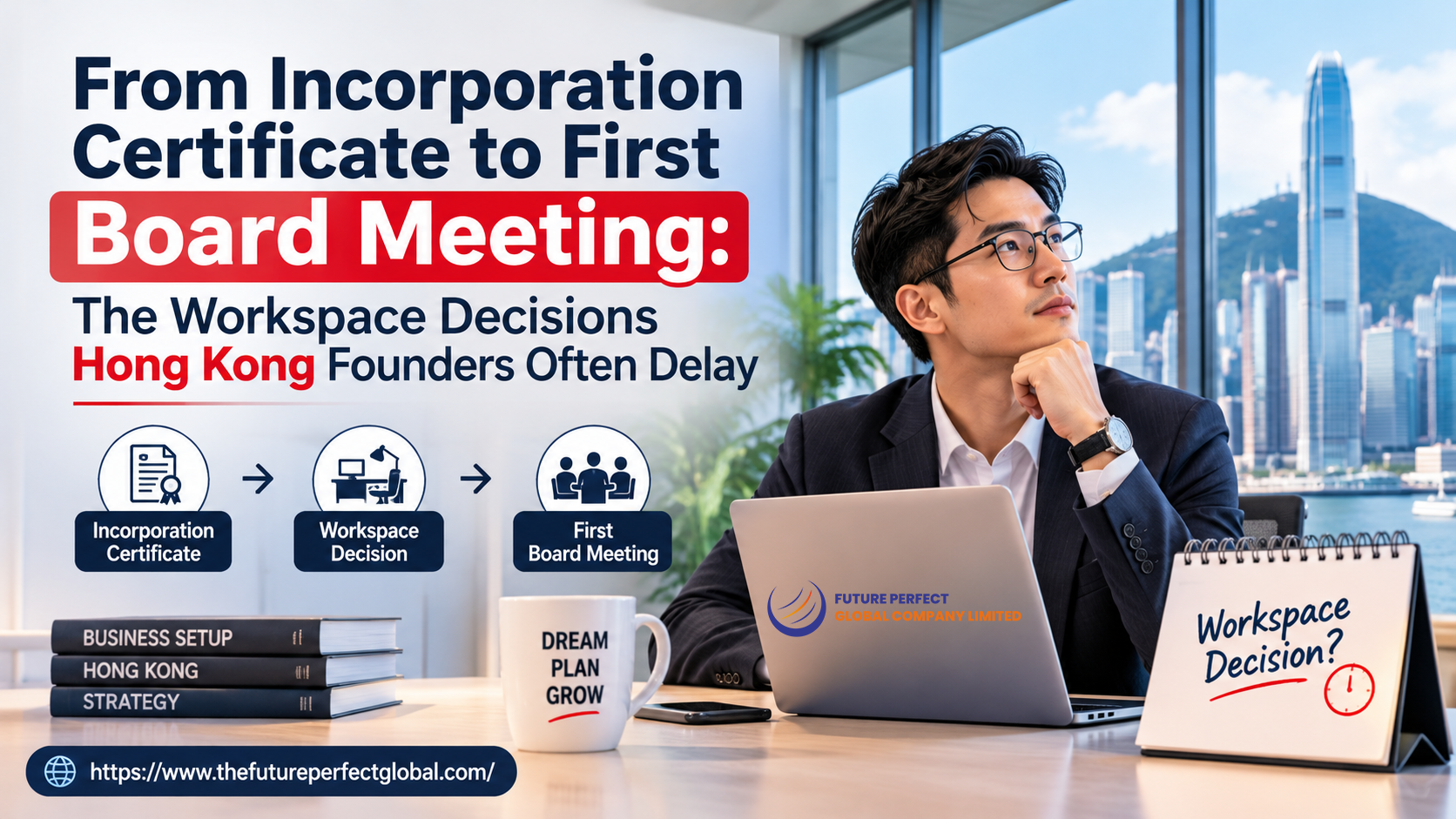
Incorporating a company is only the first milestone. Before the first board meeting, founders should consider how their workspace, document handling, meeting arrangements, company administration and day-to-day business operations will work together.
Introduction: Incorporation Is the Starting Point, Not the Operating Plan
Receiving an incorporation certificate is an important milestone for any entrepreneur. It gives the company a formal beginning, but it does not automatically establish how the business will function in everyday situations. Founders still need to coordinate documents, communicate with stakeholders, plan meetings, manage administrative responsibilities and decide where business activities will take place.
For entrepreneurs Incorporating a company in Hong Kong, these early choices can be easy to postpone while attention is focused on registration paperwork, business banking, client acquisition or product development. Yet the first board meeting or partner meeting often reveals whether the business has a practical working arrangement in place.
A workspace should not be selected simply because it looks impressive. It should fit the company’s stage, working habits, meeting frequency, team size and expected business needs. A considered workspace plan can help new companies present themselves professionally while keeping arrangements flexible as they grow.
1. Understand the Difference Between a Registered Office and a Working Space
One of the first decisions founders should clarify is the purpose of their company address. A registered office is the company’s official address for statutory and formal correspondence. A workspace, meanwhile, is where people may work, collaborate, meet clients or conduct other business activities, depending on the arrangement.
These needs may overlap in some service packages, but they are not automatically identical. Before choosing an address or office arrangement during Business Setup in Hong Kong, founders should confirm what the service includes, how mail and notices are handled, whether meeting facilities are available, and whether the address is suitable for the company’s intended activities and obligations.
Questions to Ask Before Selecting an Address or Workspace
- Is the address intended to serve as a registered office, a business location, or both?
- How are official mail, notices and courier deliveries received and communicated?
- Can the company reserve a meeting room when directors, clients or partners need to meet?
- Are the facilities and permitted uses consistent with the company’s activity and any relevant requirements?
- What are the service terms, access arrangements, additional charges and cancellation conditions?
2. Plan Your First Board Meeting Before You Need to Book It
A first board meeting may be straightforward, but it still benefits from planning. Directors may need to review the company’s initial arrangements, discuss priorities, approve internal decisions, consider financial and operational matters, or agree how responsibilities will be shared. The meeting format should make those discussions organized and practical.
Founders should consider whether a quiet meeting room, reliable connectivity, suitable seating, privacy and screen-sharing facilities are needed. If directors or advisers are joining from different locations, a space with dependable video-conferencing facilities can make the meeting easier to manage.
Prepare a Basic First-Meeting Checklist
- Confirm the purpose of the meeting and the participants.
- Prepare an agenda and circulate relevant materials in advance.
- Choose a suitable meeting format and confirm access arrangements.
- Check whether the room supports confidential discussions and document review.
- Assign someone to record decisions and action items where appropriate.
- Arrange follow-up tasks, owners and deadlines after the meeting.
These are practical planning suggestions, not a substitute for the company’s Articles of Association, applicable legal requirements or professional advice about valid board procedures.
3. Choose Workspace Based on the Company’s Actual Work Pattern
New companies do not all need the same type of workspace. A founder working independently may prioritize occasional meeting access and a professional environment. A small team may need shared desks and regular collaboration. A business that handles confidential client discussions may need a private office or dedicated meeting room.
When exploring a Business Centre Hong Kong, compare the facilities with the way your company will actually operate. Flexible workspace can be useful when the team size or schedule is still evolving, while a private office may make sense when regular in-person work, storage or privacy needs become more consistent.
Workspace Options for Different Business Stages
- Occasional workspace: Suitable for founders who mainly work remotely and need a professional setting from time to time.
- Co-working arrangements: A co working office space can offer shared facilities, flexible access options and opportunities to work around other professionals, depending on the provider and plan.
- Dedicated desks: Helpful for people who want a more consistent working spot without committing to a fully private office.
- Private offices: May suit teams requiring regular collaboration, greater privacy or a dedicated environment.
- Meeting rooms: Useful for scheduled board meetings, presentations, client discussions, interviews or partner sessions.
Rather than choosing the largest or most premium option immediately, estimate how often the space will be used and what features are essential. This keeps workspace decisions connected to the business plan rather than appearance alone.
4. Make Client and Partner Meetings Part of Your Workspace Strategy
A new company may be operating with a small team or from different locations, yet still need to meet prospective clients, suppliers, investors, advisers or business partners. The environment for these meetings can influence how smoothly conversations proceed and how prepared the company appears.
When comparing Luxury Workspaces or serviced business facilities, look beyond décor. Consider accessibility, room availability, visitor arrangements, privacy, presentation equipment, reception support and the overall experience for guests. A well-managed meeting space can be more useful than a large office that is rarely occupied.
Meeting-Facility Details Worth Checking
- Room sizes and booking availability for different types of meetings
- Wi-Fi, display screens, video-conferencing equipment and power access
- Visitor arrival instructions and reception procedures
- Privacy expectations and whether confidential conversations can be accommodated
- Pricing, booking duration, overtime policies and cancellation terms
5. Coordinate Workspace Arrangements With Company Administration
Workspace planning is easier when it is coordinated with the company’s administrative arrangements. A founder should know who is responsible for receiving correspondence, maintaining records, reminding the team of important dates, coordinating with the company secretary and keeping relevant information accessible to authorized people.
When registering a business in Hong Kong, a company has statutory requirements relating to its registered office and company secretary. A company secretary is not simply an occasional paperwork contact; the role has formal responsibilities under Hong Kong law. The registered-office arrangement should also be suitable for receiving official communications. Founders should understand exactly what is provided by their chosen service and what remains their own responsibility.
Keep Responsibilities Clear From the Beginning
- Identify the person responsible for company correspondence and internal escalation.
- Confirm how the company secretary communicates reminders, filings and requested information.
- Maintain organized copies of important company records and meeting materials.
- Clarify who can access workspace facilities, meeting rooms and company documents.
- Review service scope and contact channels so urgent matters are not left unclear.
Professional Business Registration Services Hong Kong and company administration support can help founders understand the process and coordinate their obligations. Service scope varies, so confirm responsibilities and timelines directly with the provider.
6. Avoid Paying for Facilities Your Company Will Not Use
Workspace costs can accumulate through rent, deposits, service fees, meeting-room charges, access cards, printing, storage and other extras. For a new business, the most cost-effective choice is not always the cheapest headline rate—it is the arrangement that matches expected usage and offers clear terms.
Before committing, make a simple estimate of monthly workspace use. If the founder expects to attend only a few meetings each month, occasional room booking or flexible workspace access may be more practical than maintaining a dedicated office. If staff need to work together most weekdays, a consistent space may provide better value and convenience.
Compare the Total Workspace Cost
- Monthly or annual membership and rental fees
- Deposit, setup and administrative charges
- Meeting-room rates and included booking hours
- Internet, printing, reception or other optional services
- Contract length, renewal conditions and early-exit terms
- Potential costs if the company adds employees or requires more space
7. Build a Workspace Plan That Can Adapt as the Business Grows
The workspace that works during the first month may not be suitable six months later. A business may begin with one founder, then hire staff, host more client meetings, collaborate with partners or require additional privacy. Choosing a flexible arrangement can make it easier to respond to these changes.
During Business Setup in Hong Kong, consider not only immediate requirements but also likely changes over the next year. Ask workspace providers how upgrades, additional access, private rooms, team memberships and meeting-room bookings work. Confirm that any changes are subject to availability and documented terms.
Signals That Your Workspace May Need to Change
- Meeting rooms are frequently unavailable when you need them.
- Team members have difficulty coordinating work or accessing shared facilities.
- Client discussions require more privacy or a more consistent meeting environment.
- Your current arrangement no longer fits the business’s working hours or activities.
- Workspace-related costs are rising because of frequent add-on bookings.
Review your workspace arrangement periodically rather than waiting for a major inconvenience. A short review of usage, costs and operational needs can help you decide whether to retain, adjust or upgrade your current plan.
8. How Future Perfect Global Can Support Your Hong Kong Business Journey
New founders may be focused on launching their business, yet the practical details of workspace, meetings, company administration and ongoing coordination still need attention. Having a clear point of contact for relevant support services can make it easier to understand available options and organize the next steps.
Future Perfect Global can be explored as a resource for entrepreneurs looking into Hong Kong business support, company administration and workspace solutions. When evaluating any provider, review the exact services offered, facilities available, contractual terms and suitability for your company’s needs before making a decision.
If you are Incorporating a company in Hong Kong or planning your early operations, think beyond the certificate. A practical plan for correspondence, meetings, workspace access and administrative coordination can help your business establish a more organized foundation.
Conclusion: Make the First Workspace Decision a Business Decision
Your first board meeting is more than a date in the calendar. It can be a useful moment to assess whether the company has the practical arrangements needed to operate: a suitable place to meet, a clear process for handling correspondence, organized documents, appropriate workspace access and a plan for future changes.
There is no single workspace solution for every Hong Kong company. The right choice depends on the team, the business model, the nature of meetings, privacy needs, budget and how often the facilities will be used. Founders who assess these factors early can make more informed choices and avoid paying for arrangements that do not support their actual operations.
Whether you need occasional meeting facilities, flexible shared space or a dedicated office, plan around how your business works today—and how it may work tomorrow.
Frequently Asked Questions (FAQs)
1. What should a Hong Kong company do after receiving its Certificate of Incorporation?
After incorporation, founders should confirm that statutory and administrative arrangements are in place, including the company secretary, registered office, records, business registration matters, banking preparations, applicable licences and internal processes. The exact next steps depend on the company type and activities.
2. Does a Hong Kong company need a physical office after incorporation?
A Hong Kong company must maintain a registered office in Hong Kong. Whether it needs a separate working office depends on its business activities, practical operations, contractual needs and any applicable licensing or regulatory conditions. Confirm that the address or workspace arrangement meets the relevant requirements.
3. What is the difference between a registered office and a business workspace?
A registered office is the official address used for statutory and formal company communications. A business workspace is a place used for working, meetings or business operations. A provider may offer services that combine some functions, but the scope should be checked carefully.
4. Can a newly incorporated Hong Kong company use a co-working office space?
Depending on the provider, plan and permitted use, a new company may choose shared workspace for its day-to-day work or meeting needs. It should verify whether the arrangement meets the company's operational requirements and any relevant legal, licensing, address or contractual conditions.
5. What should founders look for in a Business Centre Hong Kong?
Consider location, access, workspace types, meeting rooms, internet connectivity, reception or mail-handling arrangements, privacy, booking availability, transparent pricing and contract flexibility. Match the facilities to the company’s actual work pattern rather than choosing based on appearance alone.
6. Are Luxury Workspaces necessary for a new company?
No. Premium facilities may be useful for client-facing businesses or teams that value particular amenities and meeting environments, but they are not a universal requirement. A workspace should provide practical value, suit the business budget and support the way the company operates.
7. How often should a company review its workspace arrangement?
Review it whenever the team size, meeting frequency, working pattern, budget or business activity changes. A periodic review—such as every few months or at renewal time—can help determine whether the current arrangement remains suitable.
8. Can a company secretary help with workspace decisions?
A company secretary supports statutory and governance matters, but workspace selection is not automatically part of the secretary’s formal role. Some providers offer bundled administration or workspace services. Confirm the provider’s scope and distinguish statutory company-secretarial responsibilities from optional business support.
9. What should be prepared before the first board meeting?
Prepare a clear agenda, relevant company documents, discussion points, meeting access details, any presentation materials, and a process for capturing decisions and follow-up tasks. Check the company’s governing documents and seek advice where formal meeting requirements apply.
10. How can founders choose a workspace without committing to unnecessary costs?
Estimate how often you will use the space, compare the total price including extras, review contract terms and cancellation conditions, and ask about flexible options. Choose facilities based on practical needs and revisit the decision as the business evolves.
Explore Workspace and Business Support Options With Future Perfect Global
If you are planning your Hong Kong company’s first meetings, workspace arrangement or early operational setup, explore the available support and facilities offered by Future Perfect Global. Choose services based on your company’s requirements and confirm details directly before engaging.